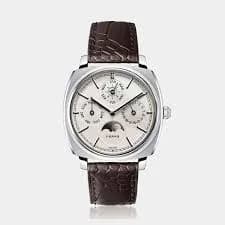
In the world of luxury watchmaking, few things spark as much debate as pricing strategy. The recent release of a perpetual calendar model from Fears has generated significant buzz, primarily due to its staggering 27,000 GBP price tag. While the watch features a perpetual calendar complication—an inherently complex piece of engineering—the core architecture relies on a modified Sellita SW300 base movement.
The central point of contention is whether this pricing can be justified for a boutique brand operating in the steel sports or dress watch category. Critics quickly pointed out that at this level, one enters the territory of established industry heavyweights. When considering the secondary and even primary market, the landscape is populated by offerings from iconic houses like Jaeger-LeCoultre, IWC, and Patek Philippe, which often carry greater historical weight and, in some cases, fully integrated in-house movements.
| Brand/Model | Estimated Price Range | Key Distinction |
|---|---|---|
| Fears Perpetual | ~£27,000 | Sellita SW300 base |
| JLC Master Ultra Thin Perpetual | Variable (New/Used) | In-house caliber |
| Frederique Constant Perpetual | ~£10,000 - £13,000 | In-house manufacture |
One perspective in my research suggests that the criticism often oversimplifies the movement. While the base is a Sellita SW300, the addition of a perpetual calendar module—specifically from a specialist like Dubois Dépraz—transforms the watch into something far more intricate than a standard three-hander. However, even accounting for the complexity of the module, the market comparison remains difficult. Brands like Frederique Constant have successfully offered in-house perpetual calendars at a fraction of the price, forcing collectors to ask what exactly constitutes 'luxury value' in the modern era.