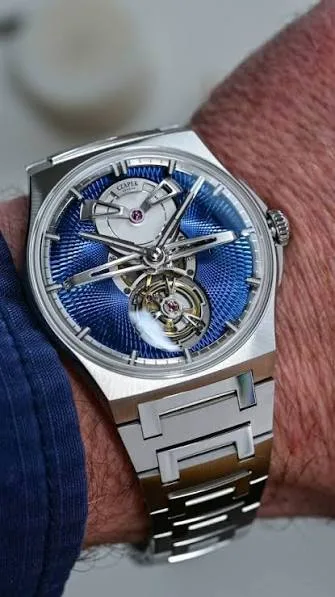
In the elevated world of independent watchmaking, few names trigger as much debate as Czapek. While some collectors view the brand as a pinnacle of modern movement architecture and boutique charm, others remain deeply unconvinced by its design language and brand identity. At the heart of this discourse is the Antarctique, an integrated sports watch that has become a lightning rod for criticism regarding originality, price-to-value, and its perceived lack of a distinct historical footprint.
The core of the criticism against Czapek often centers on the Antarctique's aesthetic. Detractors argue that the watch's design—specifically its integrated bracelet and case profile—feels unoriginal, sometimes drawing unfavorable comparisons to entry-level microbrand alternatives. When a $20,000 luxury timepiece finds its visual identity mimicked by watches costing a fraction of the price, such as the Christopher Ward The Twelve, the conversation quickly shifts from appreciation of craft to questions about brand exclusivity and the meaning of luxury.
| Feature | Czapek Antarctique | Christopher Ward The Twelve |
|---|---|---|
| Release Year | 2020 | 2023 |
| Movement | In-house Caliber SXH5 | Sellita-based |
| Material | Stainless Steel | Steel or Titanium |
| Approx. Price | $20,000 - $25,000 | $1,000 - $1,500 |
However, dismissing the brand based solely on the case silhouette ignores what proponents consider the true value: the movement. The Caliber SXH5 is a proprietary triumph, featuring a micro-rotor and meticulous skeletonized bridge work that arguably rivals, or in some instances exceeds, the finishing found in established houses. For many, the watch is less about external design trends and more about the technical artistry housed within the steel case.
Ultimately, Czapek exists in a strange middle ground. It lacks the centuries of marketing-heavy lore associated with legacy Swiss powerhouses, yet it demands a price point that invites intense scrutiny. Whether you view the brand as a breath of fresh air that listens to its clients and prioritizes movement beauty, or as a modern creation struggling to define its own unique identity in a crowded market, remains a subjective choice. For those who own one, the joy lies not in the history, but in the intimacy of the mechanical engineering.