In the world of watch collecting, some brands become household names, while others fade into the background despite possessing genuine horological pedigree. Ebel is a prime example of the latter. Founded in 1911 in La Chaux-de-Fonds, Switzerland, the brand once occupied a prestigious space in the industry, even serving as a manufacturer for houses like Cartier during the 1980s. Yet, in current enthusiast circles, the brand often fails to generate the same level of discourse as its contemporaries.
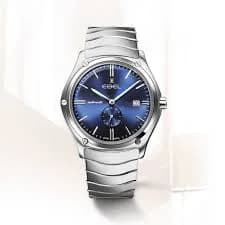
My research suggests that Ebel's struggle for popularity stems largely from its commitment to a very specific, organic design language. Unlike the sharp angles and tool-watch aesthetics that currently dominate the market, Ebel pieces are characterized by rounded, fluid case shapes and complex, integrated bracelets. To some, these bracelets feel like a bold, sci-fi-inspired departure from the norm; to others, they appear dated or overly ornate.
| Model | Released | Movement | Key Features |
|---|---|---|---|
| 1911 El Primero | c. 1986 | Automatic (Zenith Cal. 400 basis) | Iconic integrated wave-link bracelet, 5-screw bezel |
| Voyager World Timer | c. 1988 | Automatic (Lemania base) | Rotating world-timer bezel, organic case architecture |
| Sportwave | Mid-1990s | Quartz/Automatic | Accessible entry-level sports styling, rubber/steel accents |
Despite the mixed reception regarding their aesthetics, the brand's mid-century and late-80s output remains significant. The 1911 El Primero Chronograph is particularly notable for integrating one of the industry's most legendary movements, making it a target for value-minded collectors who prioritize mechanics over current style trends. While the Sportwave line offered a more entry-level, rugged approach to the brand's identity, the polarizing nature of their integrated bracelets continues to act as a barrier for many modern buyers.
Suggested product card: Ebel 1911 El Primero Chronograph. This vintage model remains the pinnacle of the brand's technical prowess, blending a high-beat automatic engine with a design that is unmistakably rooted in the 1980s. Expect to find examples on the secondary market ranging from $1,000 to over $4,000 depending on the material and condition.
Ultimately, Ebel represents a fascinating segment of the secondary market where aesthetic preferences often outweigh technical merit. If you can appreciate the unique, organic design language of the 80s and 90s, there is significant value to be found in their historical collections. However, for those who prefer modern, sharp, or utilitarian designs, Ebel will likely remain a divisive footnote in watch history.