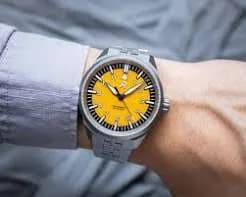
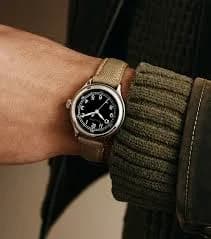
Most watch sizing charts give you a vague range and call it done. But real owner feedback across a wide spread of wrist sizes reveals more specific, and sometimes surprising, guidance.
6-6.75 Inch Wrists: The Sweet Spot for Vintage and Small Watches
Owners in this range consistently reported success with genuinely small watches — 32-36mm pieces described as looking intentional and classy rather than undersized. This aligns with everything covered in our small-wrist watch coverage: this range is where brands like Traska, Lorier, and vintage military pieces genuinely shine, rather than being a compromise.
7-7.5 Inch Wrists: The Most Flexible Range
This band of owners reported the widest range of "what works" — comfortably wearing everything from 34mm vintage pieces up to 44-46mm sport watches, often within the same collection. One owner specifically described enjoying watches from 32mm all the way to 51mm depending on the day, suggesting this middle wrist range has the most genuine styling freedom, constrained more by personal taste than physical proportion.
7.75-8 Inch Wrists: The Transition Zone
Here, opinion genuinely splits, and it's worth taking both sides seriously rather than picking one "correct" answer. Some owners in this range specifically drifted toward smaller watches over time despite historically wearing 40mm+ pieces, settling on 36-39mm as their new comfortable range. Others at a similar size found anything under 38mm looking noticeably too small. The honest takeaway: this is genuinely a personal-preference zone, not one with a single right answer — try before you commit.
8-8.5 Inch Wrists: Where Small Watches Generally Stop Working
Multiple owners at this size were direct and consistent: sub-38mm watches read as disproportionate, described variously as looking like a "lady's watch" or simply too small to take seriously. If your wrist is in this range and you're drawn to a specific small vintage piece, the strap/bracelet-balancing trick from our sizing-and-styling piece becomes especially important — or consider whether the watch's dial size relative to its case (rather than case size alone) might make a nominally small watch wear larger than the millimeter spec suggests.
The One Factor That Overrides All of This: Lug-to-Lug, Not Just Case Diameter
Several experienced owners pointed out that case diameter alone is a misleading spec — a watch with a small case diameter but a long lug-to-lug measurement (the total length from edge to edge) can still overhang a smaller wrist uncomfortably, while a slightly larger-diameter watch with a short, tight lug-to-lug can wear smaller than its stated size. One specific example: a watch that was among an owner's largest by case diameter still wore small in practice due to a notably short lug-to-lug and dark, minimal dial design. When shopping by wrist size, checking lug-to-lug alongside diameter gives a far more accurate picture than diameter alone.